.jpg)
Aliyev's Hitlerite Theses and the Amasia Incident: How the Government Opens the Doors to the Enemy
The main thesis voiced during the podcast was that the policy pursued by the Armenian authorities has led to a situation where the enemy feels more free in our country than its own citizens. A vivid proof of this is the events in Amasia: while the Armenians of Artsakh were being forcibly displaced from their homes, Azerbaijanis, under the pretext of visiting their former graves, freely entered the Shirak region, laid flowers, and left unhindered. This is viewed as an overtly anti-Armenian move, as no Armenian today can even approach Shushi or their ancestral home in Artsakh.
Parallelly, the situation of the military-political leadership of Artsakh held in Baku prisons was addressed. Aliyev's recent statements, where he compares Artsakh officials to Nazi Hitler's staff, were characterized as a blatant lie and a justification for fabricated trials. Special emphasis was placed on the Azerbaijani hatred towards Ruben Vardanyan, as he was the voice of Artsakh on international platforms, and unlike Nikol Pashinyan, who called Artsakh a "rope around our neck," Vardanyan does not betray his principles even in prison.
The discussion also covered internal political blackmail in the form of Gevorg Papoyan's thesis that there will be no peace without their government. This, against the backdrop of Pashinyan's recent US visit and potential relations with Vance, is viewed as an attempt to intimidate the people and mask their own failures. At the same time, the violence used against protesters in Azerbaijan once again proves the dictatorial environment in which our compatriots find themselves.
________________________
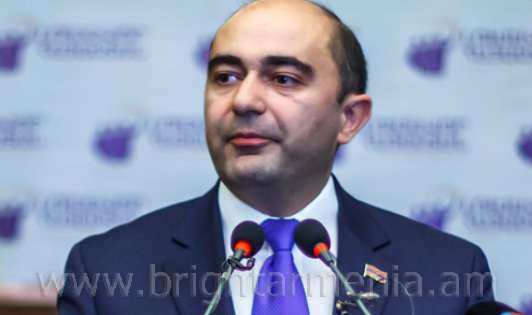
Edmon Marukyan and Karpis Pashoyan, within the framework of the Platform podcast, discuss the truths that they believe are as necessary as air and water for Armenia and the Armenian people, as well as the challenges facing Armenia.


2021 Parliamentary elections

2018 Parliamentary elections
2018 Avagani Elections of Yerevan
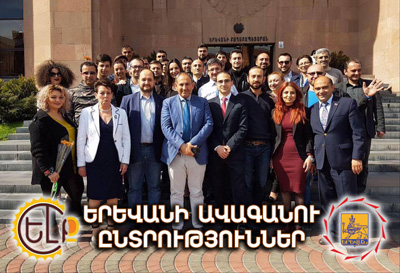
2017 Avagani Elections of Yerevan
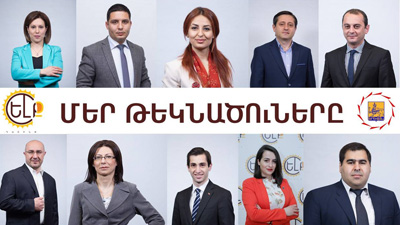
2017 Parliamentary elections
 1111.jpg)
 krist.jpg)
 14192588_1235055369859845_5972317306482858817_n.jpg)